The data science role is not disappearing. But the job is changing.
Artificial intelligence (AI) can now write SQL queries, generate Python code, clean parts of a dataset, create visualisations, and assist with machine learning workflows. Work that once took hours is now completed in minutes.
That shift raises an obvious question for anyone considering a career in data: “What will data scientists actually be expected to do when AI can handle more of the technical work?“
The answer is more interesting than simply saying AI will replace or preserve the profession.
Data science is moving towards a model where technical skills still matter, but judgement, problem definition, communication, and the ability to evaluate AI-generated outputs matter more than they did before. For people learning data science from scratch, this changes what it means to become job-ready.
It also makes understanding the wider data landscape increasingly useful. Knowing the difference between data science and analytics, for example, can help learners make better decisions about which skills and career paths to pursue.

Is data science still a good career now that AI writes code?
Data science has always evolved with technology. Early data analysis relied heavily on statistical methods and specialised computing systems. As programming languages became more accessible and organisations began collecting enormous amounts of digital information, tools such as Python transformed how professionals worked with data.
Machine learning expanded that capability further. Instead of only analysing what had already happened, data professionals could build models to identify patterns, make predictions, and support automated decisions.
Generative AI is now adding another layer. Data scientists can use AI to explore datasets, generate code, explain unfamiliar functions, suggest analytical approaches and automate repetitive parts of their workflow. But AI still depends on the quality of the data and the decisions surrounding it.
A model trained on incomplete information can produce unreliable predictions. A technically accurate analysis can still answer the wrong business question. A compelling visualisation can communicate a misleading conclusion if the underlying measures are poorly chosen.
The technology may become more capable, but someone still needs to decide what problem is worth solving and whether the answer makes sense. That is where the role of the data scientist is shifting.
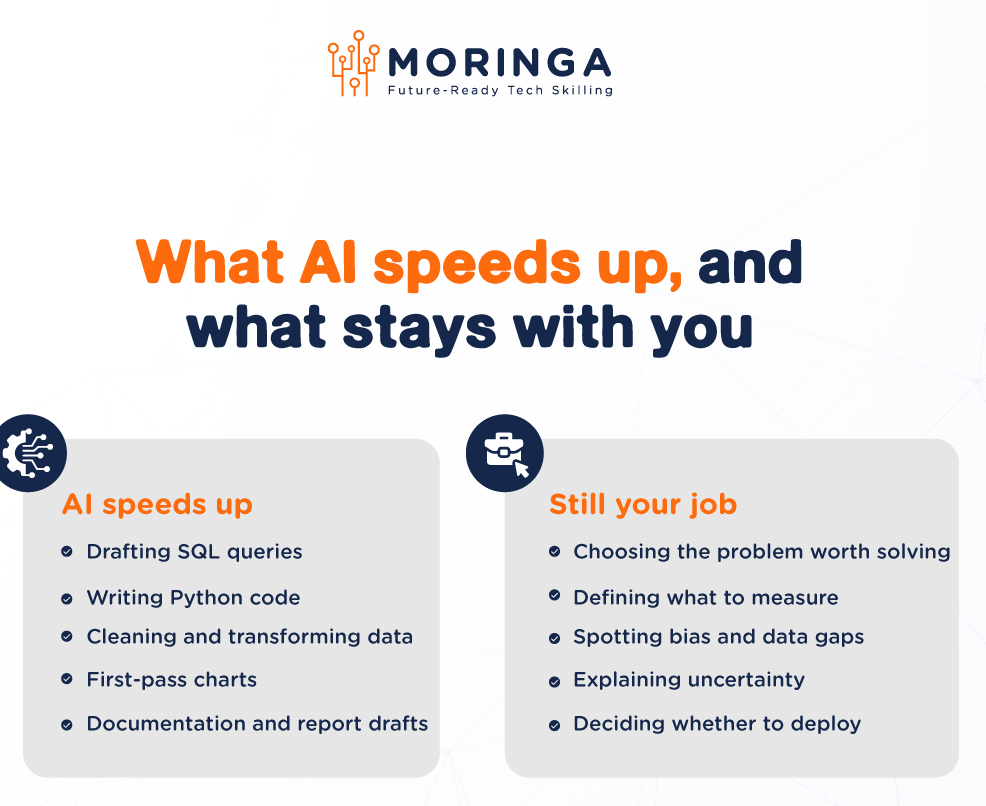
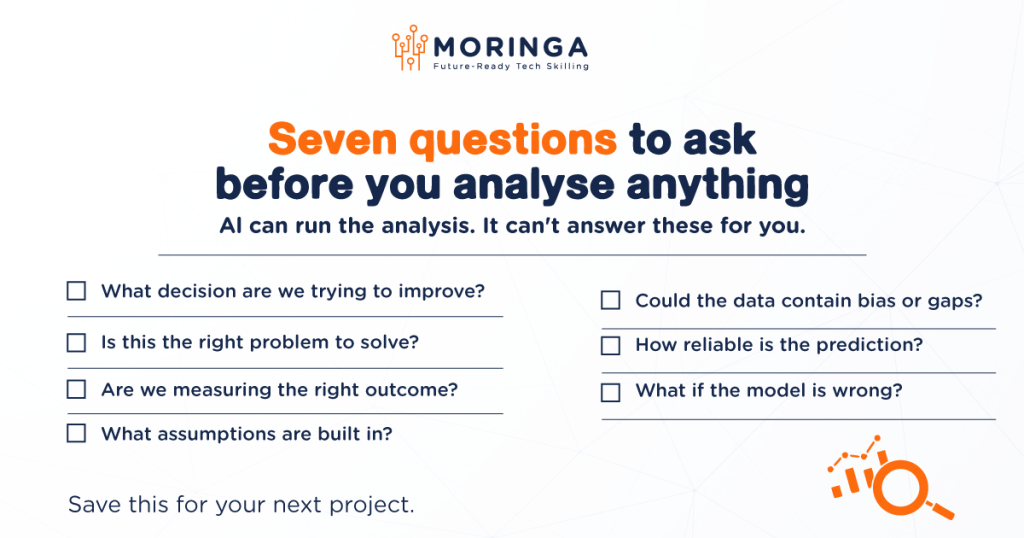
The top 7 skills that matter most now that AI writes the code
Imagine a company wants to reduce customer churn. An AI system could help analyse customer records, identify patterns and build a prediction model. But before any of that happens, someone needs to establish what “churn” actually means, determine which customers should be included, understand what data is available, and decide how the resulting prediction will be used.
Perhaps the real problem is not predicting churn at all. Maybe customers are leaving because of a pricing issue, a service problem, or a product feature that is not meeting expectations. This is where data science involves much more than technical execution.
These questions can arise before a single line of Python is written. AI can make it easier to execute an analysis. It does not automatically make the original question a good one.
Want to build this kind of judgement with real datasets? Moringa’s Data Science Bootcamp trains you on business problems, not just tools.
What should beginners learn first: SQL, Python, statistics, or AI?
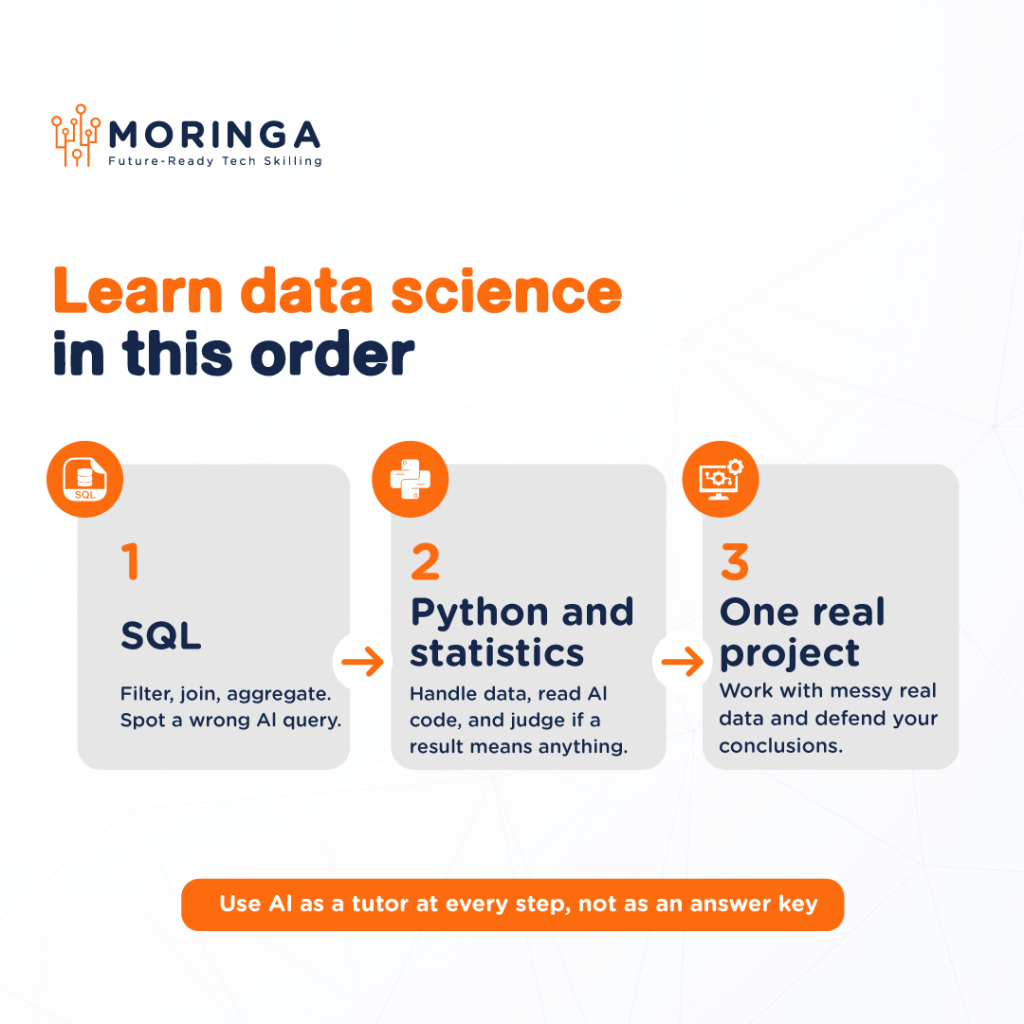
If you want to learn data science from scratch, follow this order. Use AI alongside each step, not instead of it.
- SQL first. Most business data lives in databases. SQL teaches you to filter, join and aggregate records, and to think about how data is structured. It also lets you spot when an AI-generated query is wrong.
- Python next. It is the main language for analysis, machine learning and AI work. You need enough to manipulate data, use common libraries, and read the code AI writes for you. If you cannot read it, you cannot verify it.
- Statistics alongside Python. Distributions, sampling, correlation, hypothesis testing and uncertainty help you judge whether a result means anything. You do not need to be a statistician, just able to ask if a conclusion is justified.
- AI as your tutor, not your answer key. Use it to explain concepts, debug errors and suggest approaches. Copying a solution you do not understand skips the skill the exercise was meant to build.
New to coding? Start with our beginner data science course. No programming experience needed.
What an AI-ready data scientist looks like
Being AI-ready in 2026 does not mean knowing every AI tool on the market. It means knowing how to work with AI without surrendering your judgement to it.
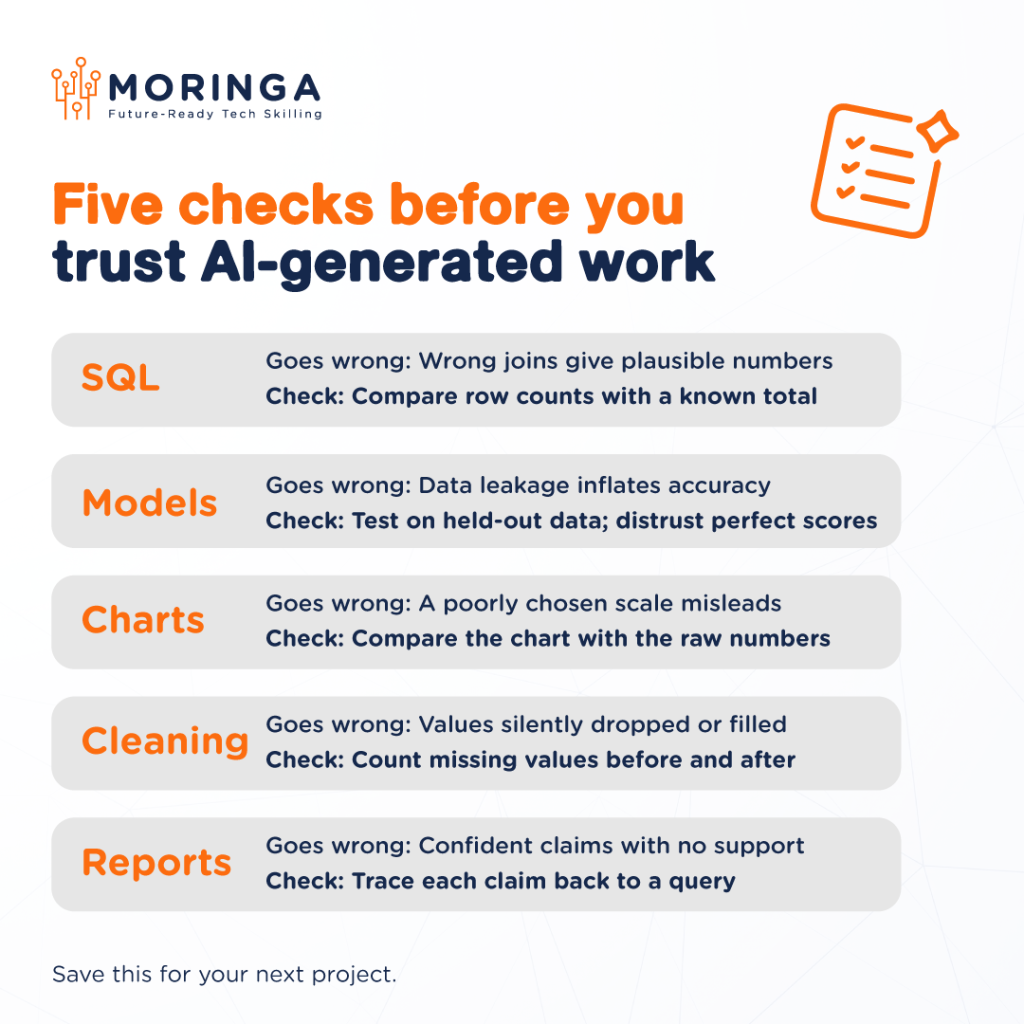
An AI-ready data scientist can use an AI assistant to generate a first version of code and then review it. They can write a clear prompt, but they can also recognise when a prompt has produced an unreliable answer. They can use AI to investigate possibilities while checking those possibilities against the underlying data.
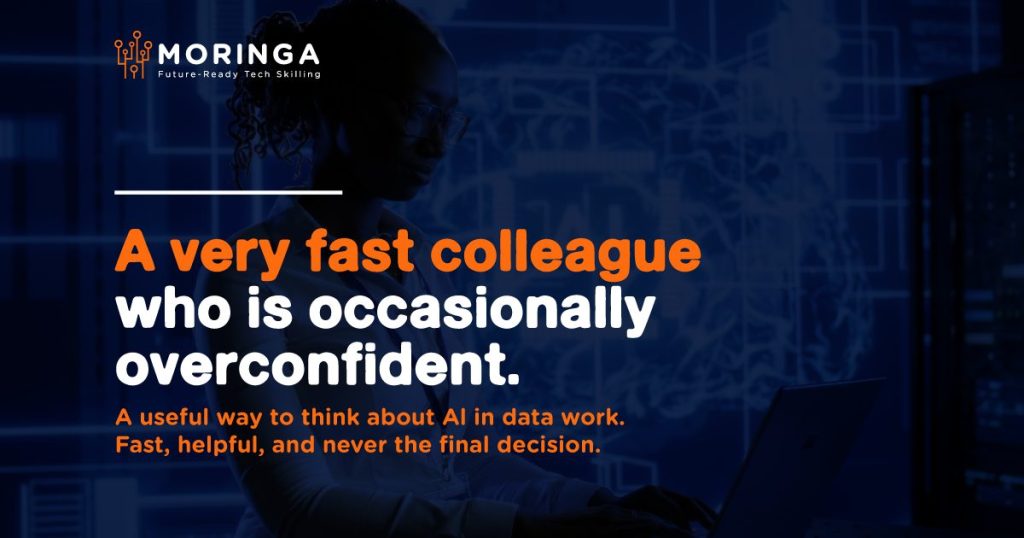
They also understand when AI should not be trusted with a particular task. One useful way to think about AI is as a very fast colleague who is occasionally overconfident. It can save you time, produce useful suggestions, and help you get unstuck—but you would not hand that colleague the final decision without checking their work.
That mindset becomes especially important as AI tools become embedded in common data platforms.
Where Data Science Careers in Kenya are Heading
The growth of AI is creating new opportunities across the broader data and technology ecosystem.
Traditional data science roles continue to evolve alongside roles such as:
- Machine learning engineer
- Data engineer
- Analytics engineer
- AI product specialist
- Business intelligence professional
- AI governance specialist
- Responsible AI practitioner
The boundaries between these roles can also overlap. A data scientist may work closely with engineers to put a model into production. An analyst may use machine learning-assisted tools without becoming a machine learning engineer. A data engineer may increasingly work on infrastructure that supports AI applications.
For people planning their careers, this means there is no single route into the data profession.
The more useful question is “which problems you want to spend your time solving?”
The future belongs to adaptable data professionals
AI will continue to automate parts of data work. There is little reason to expect that trend to stop. But automation also changes what organisations can ask their data teams to do.
When routine analysis becomes faster, teams can investigate more questions. When coding takes less time, professionals can spend more time validating assumptions. When AI can generate a first draft, the person reviewing that draft becomes responsible for determining whether it is fit for purpose.
That creates a different kind of data professional. The strongest candidates will not necessarily be those who know the largest number of tools. They will be people who combine technical foundations with curiosity, judgement and the ability to communicate.
For anyone considering a data science career, the message is therefore not to compete with AI at tasks AI is increasingly good at. Learn how to work with it. Build the fundamentals that allow you to question it. And develop the judgement that helps you know when the answer it gives you is worth trusting. That is where the value of data science is heading.
How do you choose a data science course in Kenya?
If you are considering a data science course in Kenya, look beyond the tools; these will change. The fundamentals are more durable. A strong data science training program should give you opportunities to work with actual datasets, practise Python and SQL, understand statistics, build analytical projects, and explain your findings.
Project work is particularly important because data rarely arrives in the clean form used in tutorials. You need to encounter missing values, inconsistent information, ambiguous questions, and imperfect assumptions.
For beginners, an introductory programme can provide a structured starting point before moving into more advanced topics.
Moringa offers two entry points:
- The Intro to Data Science course is for complete beginners.
- The Data Science Bootcamp goes deeper into Python, SQL, data analysis, machine learning, and applied AI, with project work throughout.
The broader lesson is that learning data science from scratch should not be about collecting certificates or memorising tools. It should be about developing the ability to investigate problems with data and defend the conclusions you reach.
Start your data science career
AI is not a reason to avoid data science. It is a reason to learn it properly: strong fundamentals, sharp judgement and the confidence to question what AI tells you.
The next Data Science Bootcamp intake is ongoing. Seats are limited.