Why knowing how to use AI at work is becoming an essential skill for professionals in Kenya
AI has quietly become part of everyday life in Kenya. It sits inside the apps people use to write, search, and plan, and more and more in the tools they use at work. In DataReportal’s Digital 2026 Mid-Year Global Update, 97.5% of Kenyan internet users aged 16+ said they had used at least one AI tool in the past month. That was the highest rate of the 54 countries surveyed.
With this data in mind, the bigger question is no longer whether professionals use AI. It is whether they use it well, and that gap is what employers are starting to pay for.
AI at Work in Kenya: Real Examples from Insurance, Healthcare, Hospitality and Automotive
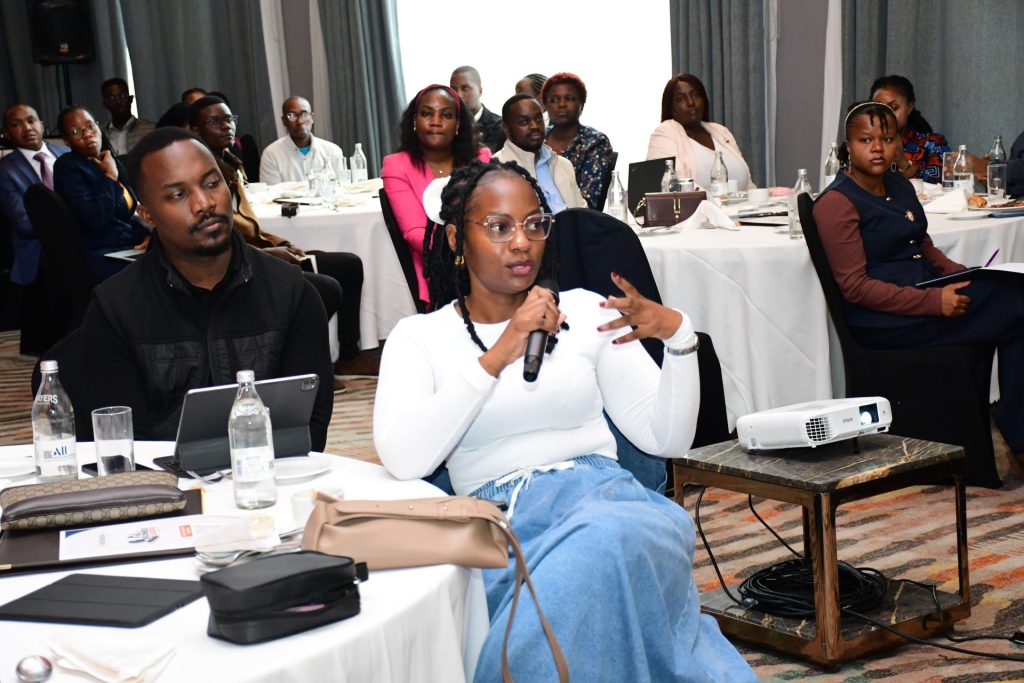
On 6th November 2026, Moringa hosted an AI Breakfast that brought together 47 business and IT leaders from different industries. The leaders shared how AI has become part of their daily operations. The session offered a candid look at what is working and what is not.
The examples shared at the breakfast came from 4 different sectors, but they all pointed the same way.
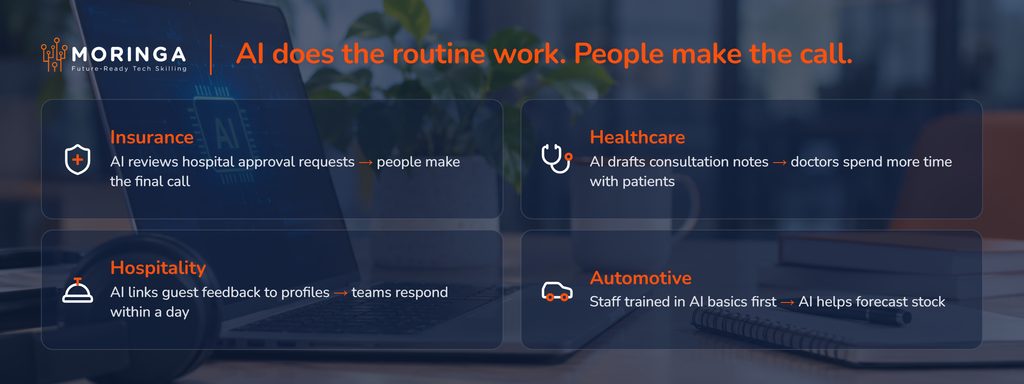
- In insurance, AI now reads hospital approval requests and recommends a decision, cutting the time patients spend waiting at the counter.
- In healthcare, an AI scribe listens to consultations with the patient’s consent and drafts the doctor’s notes. As a result, clinicians spend more time with patients and less time typing.
- Similarly, in hospitality, AI helps teams respond to guest feedback within a day and link it to each guest’s profile.
- In automotive, one business started by training its staff across Kenya, Uganda and Tanzania in AI basics. It then used AI to forecast stock more accurately.
In every case, AI did the heavy lifting on routine work, while people reviewed the output and made the final call. A few other patterns showed up across all four stories:
- Every project started with a real problem. Patients waiting at counters, doctors buried in typing, unanswered guests. The people who spotted these problems understood the work, not the technology.
- Clean data is everyone’s job. AI is only as good as the notes, records and documents it works from, and those come from staff across the business.
- Roles are shifting, not just shrinking. Time saved on routine work is being redirected to higher-value tasks, and staff who can work with AI are the ones moved into them.
Why AI is becoming an essential skill for every professional
So why does any of this matter if you work in finance, HR, operations, customer service or marketing? Here is what came out of the breakfast, and what the world’s biggest workplace studies are finding too.
1. Businesses are building AI into everyday work
This is no longer a handful of tech companies experimenting. McKinsey’s 2025 State of AI survey of nearly 2,000 people found that 88% of organisations now use AI in at least one business function. The breakfast showed the same thing closer to home, with AI running inside approvals, clinical notes, guest feedback and stock planning.
However, the same survey found only 7% of organisations have fully scaled AI across the business. Most are still figuring it out, which means they need people who can help make it work. Knowing your way around AI tools is fast becoming as basic as knowing your way around email or Excel.
2. Your role is changing, even if your title isn’t
The breakfast examples reflect a wider shift: AI took over the repetitive, rules-heavy tasks and people moved into work that needs judgement. PwC’s 2026 Global AI Jobs Barometer, which analysed more than a billion job ads, shows the same shift globally. Entry-level roles most exposed to AI have grown 35% since 2019, while other entry-level roles shrank by 10%, and the AI-exposed ones are seven times more likely to ask for skills like judgement and leadership.
In plain terms, the new opportunities go to people who can review AI’s work, spot what it missed and own the final decision.
3. Efficiency is becoming the baseline
When a colleague can draft a client proposal in an hour instead of a day, expectations shift for everyone. Microsoft and LinkedIn’s Work Trend Index, based on a survey of 31,000 people in 31 countries, found that regular AI “power users” save more than 30 minutes a day.
That saved time goes into sharper analysis, better ideas and more time with clients and colleagues.
4. The skills that matter are changing fast
The World Economic Forum’s Future of Jobs Report 2025, built on input from more than 1,000 employers, expects 39% of workers’ core skills to change by 2030. AI and big data sit at the top of its list of fastest-growing skills.
You don’t need to chase every new tool. Get the fundamentals right, and each new tool becomes easier to pick up, master and apply in your work.
5. Employers want AI skills, but won’t always train you
In the Work Trend Index, 66% of leaders said they would not hire someone without AI skills. Yet only 39% of people using AI at work had received any training from their employer.
A version of this came up at the breakfast too. One business found its IT team racing ahead while non-technical staff lagged behind. If you wait to be trained, you could be waiting a while. Instead, taking the first step yourself is one of the clearest ways to stand out.
6. Using AI responsibly is part of the job
Every example from the breakfast had safeguards built in: patient consent, data protection and a person checking the output. That matters, because the Work Trend Index found 78% of AI users bring their own tools to work. This can put company data at risk. In Kenya, the Data Protection Act makes careless handling of customer information a real liability.
Employers need people who know what should never go into an AI tool, and who can catch an inaccurate or biased answer before it reaches a client.
7. AI skills pay, and Kenya is moving fast
PwC found that jobs asking for AI skills offer an average wage premium of 62%. Demand is rising just as quickly: in PwC’s data, the number of jobs requiring AI skills grew 69%, compared with 9% for the job market as a whole. That is almost eight times faster. In other words, employers are not only paying more for AI skills, they are also creating more roles that need them. Treat the pay figure as a market signal rather than a promised raise, but the direction is hard to ignore.
Kenya already leads on usage. The gap is depth: PwC’s survey of workers in Kenya and four other African markets found that only 17% use AI agents daily, and most are not yet using AI to automate their work. Moving from casual user to confident, skilled user is where the opportunity sits.
AI skills to build ahead of 2027: a starting point for working professionals
If you’re just starting out with AI at work, the gap between using AI and using it well is smaller than it looks. You don’t need to learn to code or build AI systems. These five practical skills apply to almost any role, technical or not.
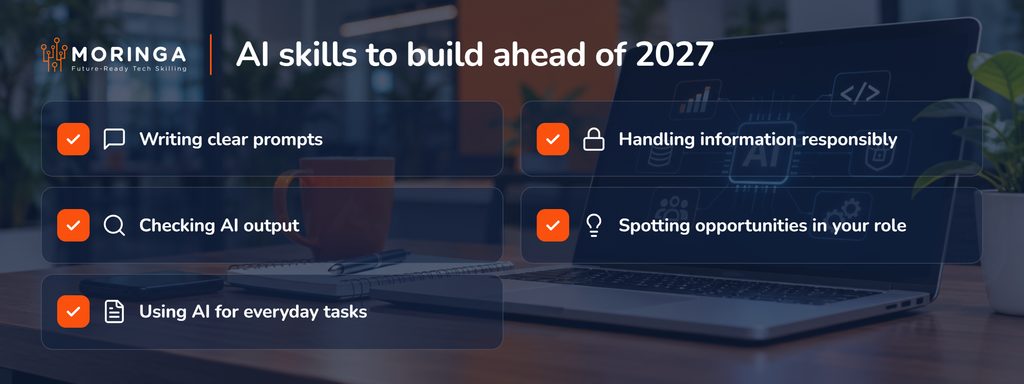
1. Writing clear prompts
Most disappointing AI answers come from vague instructions. “Write a report” gets you something generic. “Summarise this quarter’s sales figures for the management meeting in five bullet points, highlighting the two biggest changes” gets you something you can use. Learning to give context, set the format and say who the output is for means less back-and-forth and more first drafts you can actually work with.
What you gain: time back in your day, and output that sounds like it came from someone who understands the task.
2. Checking AI output
AI writes with confidence even when it’s wrong. It can invent a statistic, misread a spreadsheet or miss a detail that matters to your client. Checking means reading critically: comparing figures against the source, questioning claims that seem too neat, and spotting answers that are biased or off-tone for your audience.
What you gain: trust. Managers and clients rely on people whose work they don’t have to double-check, and this is one of the skills employers value most as AI spreads.
3. Using AI for everyday tasks
This is where the hours come back. Think of turning a 30-page policy document into a one-page brief, drafting a first version of a monthly report, building slides from your meeting notes, or asking AI to spot trends in a spreadsheet you’d otherwise sort through by hand.
What you gain: more time for the work that gets you noticed: analysis, problem-solving and time with clients and colleagues.
4. Handling information responsibly
Pasting a customer list, a payroll file or a confidential contract into a public AI tool can expose your organisation to real risk under Kenya’s Data Protection Act. Responsible use means knowing what can go into which tool, removing sensitive details before you share, and following your organisation’s policies.
What you gain: you become someone who can be trusted with AI, a quality that matters more as organisations write their own AI rules.
5. Spotting opportunities in your own role
Every role has tasks that are repetitive, slow or prone to error, like weekly status updates, routine customer replies or data entry. The people who notice these and ask ‘could AI help here?’ shape how their teams adopt AI. In fact, that’s exactly how the projects shared at Moringa’s AI Breakfast began.
What you gain: visibility. You become the person who improves how work gets done, which is how new opportunities and roles open up.
These are skills you can build in weeks, not years. Each skill builds on the last, and together they are the foundation for more advanced work in 2027, from automating workflows to working with AI agents.
Where to start: how to use AI at work with confidence
The easiest way to begin is to pick one AI assistant and use it on real tasks from your week. Ask it to summarise a long email thread, tidy up a draft or explain a spreadsheet. Then check what it gives you, and notice where it helps and where it falls short.
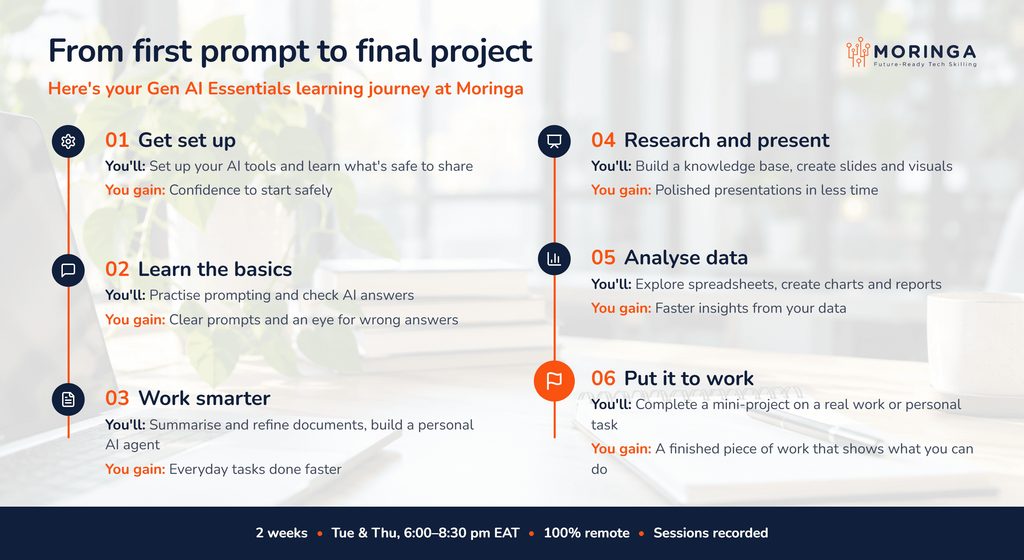
If you want a structured path, Moringa’s Generative AI Essentials programme is built for working professionals with no technical background. The programme runs over two weeks of live, remote evening classes. You’ll learn to write effective prompts, use AI for documents, presentations and data analysis, and apply AI responsibly at work. You finish with a mini-project where you apply AI to a practical work or personal use case. Moringa’s programmes are shaped by industry practitioners who use these tools every day, so the focus stays on skills you can apply, not theory.
Whether you’re in a hospital, a hotel or an insurance office, you’re probably already using AI. Now is the time to get good at it.